
Biweekly Pay at Delta

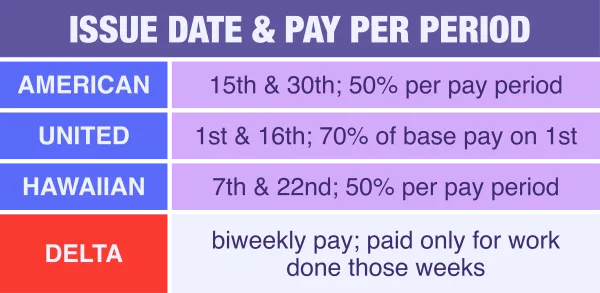
Management unilaterally changed the way Flight Attendants are paid in 2018. There are more than 10,000 Flight Attendants currently on the line since this change was made. You may not realize how much our flexibility has suffered since. Delta Flight Attendants are the only Flight Attendants paid this way.
Why? Management over the years can’t seem to stick with one answer. But we know the real impact has been significant and negative for Delta Flight Attendants.
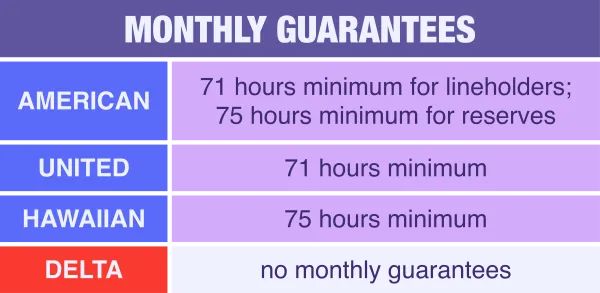
The change eliminated a monthly guarantee that Flight Attendants would be paid if you were available to work.
- Our previous 45-hour monthly guarantee was the lowest among major carriers, but even so it provided stability and predictability. That guarantee was split across two checks, allowing Flight Attendants to plan our budgets and our time over the course of the entire month.
We now have to fly within the pay period in order to have money in that check and cover healthcare premiums or other deductions.
- If you do not fly during the pay period, your paycheck could be zero, even if you worked heavily earlier or later in the same month. Healthcare premiums and other deductions still apply regardless. In practice, monthly take-home pay is now calculated around 28-day pay cycles instead of the actual bid month of 30 or 31 days.

Under the previous system, you were paid for being available to work for the month, not only for flying in a narrow window of time. The biweekly pay system effectively forces us to fly in every pay period. For Flight Attendants that means working more frequently and more overall hours —or risk losing our benefits.
And when life happens due to sickness or other last minute emergencies, biweekly pay leaves us with less time to pick up and make up the difference in our next check. Biweekly pay has made our job less flexible and our paychecks less consistent, increasing required productivity simply to maintain regular income and benefits.
Delta ALPA Pilots were able to beat back the change to biweekly because they have a union contract and management is required to negotiate changes with them.
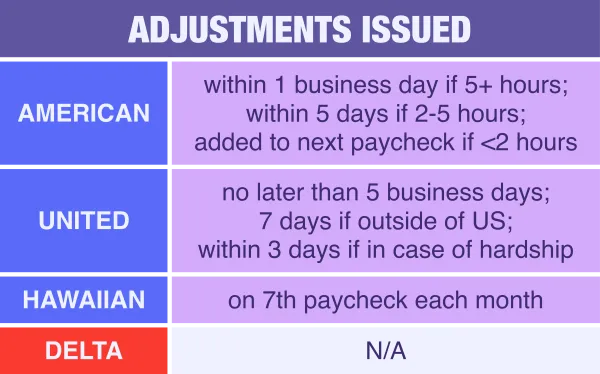
When we have a union contract, we’ll have the power to negotiate a pay system that works for us—instead of being forced to follow one that only benefits the company and shifts the full risk onto Flight Attendants. Here's some contract language that exists today:


OJI Guide: What Flight Attendants Need to Know About On-the-Job Injuries — and How a Union Contract Can Strengthen Our Protections For OJI